Home Blog Page 3

India’s medical prices may rise as a result of the Iran-US war.

0

Pharma industry bodies have already raised the issue with the government, sending an emergency report highlighting the risk to raw material supplies.

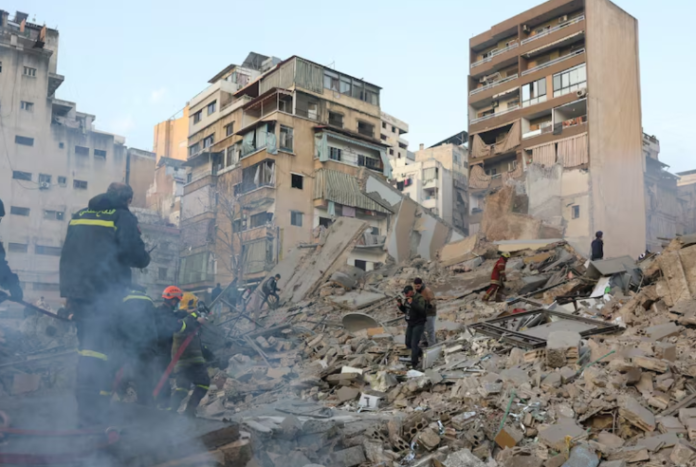
The ongoing Iran–Israel–US conflict is beginning to affect India’s medicine supply, raising concerns over a possible rise in prices in the coming weeks. Traders and industry representatives say the impact is already visible at the wholesale level.

At Bhagirathi Palace Market in Delhi, one of the country’s key wholesale hubs for medicines, traders say the pressure is building. Ashish Grover, president of the Delhi Drug Traders Association, said rising input costs are starting to affect the entire supply chain.


According to former envoy Masood Khan, the Iran War reveals cracks in the international system.

0

Former US ambassador Masood Khan warns Iran conflict deepens humanitarian crisis and exposes fractures in global order, signaling growing American isolation.

ISLAMABAD: Former Pakistani Ambassador to the United States Masood Khan has warned that the ongoing conflict involving Iran is laying bare deep fractures in the global order, while simultaneously deepening the humanitarian crisis and signaling growing American isolation on the world stage.

Conflict highlights shifting global dynamics

The former envoy stated that the war involving Iran has exposed significant cracks in the international system, pointing to the widening gap between major global powers on how to address the crisis. Masood Khan underscored that the conflict is not merely a regional issue but one that carries far-reaching implications for the broader global order.

According to the former ambassador, the situation has brought to light the increasing diplomatic isolation of the United States, as its position on the conflict finds fewer supporters among the international community. He noted that Washington’s approach has contributed to a growing sense of unilateralism that is at odds with the multilateral frameworks that have traditionally governed international relations.

Humanitarian concerns mount

Masood Khan also drew attention to the worsening humanitarian dimensions of the conflict, warning that the war is deepening an already severe humanitarian crisis. The former diplomat stressed that the toll on civilian populations continues to grow as the conflict escalates, with communities caught in the crossfire bearing the brunt of the violence.

The ex-ambassador’s remarks come at a time when international attention is increasingly focused on the humanitarian fallout of the conflict, with aid agencies and global bodies raising alarm over the deteriorating conditions on the ground.

American isolation a growing concern

One of the key themes of Masood Khan’s assessment was the growing isolation of the United States in the context of the Iran conflict. The former envoy highlighted that the American stance on the crisis is increasingly at odds with the positions taken by other major powers, suggesting that the conflict is reshaping alliances and diplomatic relationships across the globe.

The former ambassador’s observations add to a growing chorus of voices from diplomatic circles warning that the conflict risks further destabilising an already fragile international order. His remarks underscore the need for diplomatic engagement and multilateral solutions to prevent the crisis from spiralling further out of control.

Masood Khan, who served as Pakistan’s ambassador to the United States, has been a prominent voice on matters of international diplomacy and geopolitics. His assessment of the Iran conflict and its broader implications for the global order reflects the deep concern among seasoned diplomats about the trajectory of current international affairs.

Share:

Marc Antoni celebrates his 40th birthday with a makeover

0

Marc Antoni hair salon has reopened this week, after closing for 10 days to have its own makeover. The Hart Street business has been celebrating being in Henley for over 40 years and has a loyal client base that were happy to see it reopen its doors, ready to experience not only its new look but some of its new additions too.

Back in 1966, the Marc Antoni story began with the opening of their first salon at Chatham Street in Reading. Named in honor of Bruno Marc and Simon Antoni, the eldest sons’ of the visionary hairdresser, Bruno Giammattei Snr, it was Bruno Marc who opened the Henley salon, aged just 19 years old. The sons now run 4 Marc Antoni salons (in Henley, Fleet, Woodley and Bracknell) as well as having their own training school. They also currently hold 8 hairdressing industry awards.

Visitors to the salon, will be wearing newly purchased, bronze gowns and will be comfortably sat in the, also newly purchased, salon chairs – which have come all the way from Milan. With styling based on the British Bentley, the soft leather chairs in warm, coffee-colored tones are complemented by the clean lines of the fresh paint work and the newly laid wood-style flooring. Probably the most notable change is to the basins area, where the team have installed massage chairs. Clients can lay in fully supported comfort, whilst the chairs provide a massage as well as a cozy warmth from the heated seats.

First client of the day, Lisa, who comes all the way from France to have her hair done and is probably the client that travels the furthest said, “I love the new look, it’s fabulous. The chairs are lovely and it looks fresh – Tom is the best in the world, so I come every three months! It’s really inviting and warm – they are providing a really lovely experience. I have a bad back so comfort is key and these new chairs are great. I’m really looking forward to trying out the massage chairs in a little while too.”

Charlotte Giammattei, the salon’s Principal Stylist, and daughter of Bruno Marc, explained that the family are proud of the business that they have created. Initially, as a youngster, Charlotte wanted to be a veterinary nurse or to work with horses, but when she turned 16, she changed her mind and decided to follow the, probably inevitable, path. After training at Vidal Sasson for 30 weeks, she rejoined the family fold. About the refit, Charlotte said, “We reopened on Friday and we’ve had some really lovely feedback from everyone that’s come in so far. Lots of people have mentioned how comfortable the new massage chairs are – although if they don’t like the massage bit we can turn that off! All the staff were in last Thursday to help finish off and make sure everything was just right. Like with hairstyles, salon trends move on and we wanted to make sure we were providing the best for our clients.”

Following the strike, Moldova gives the Russian ambassador a bottle of contaminated Dniester water.

0

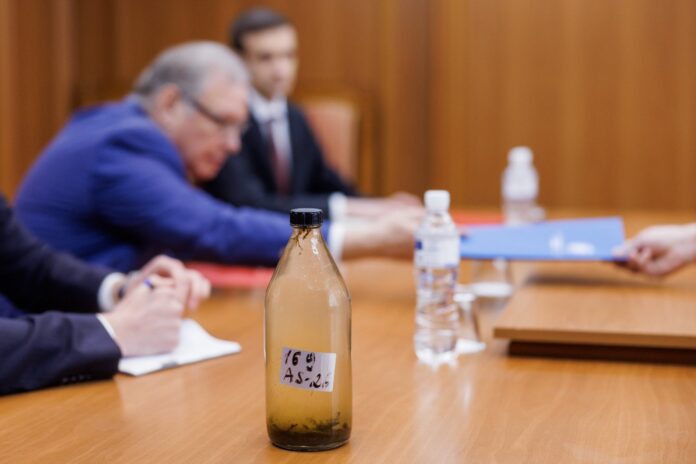
Moldova’s Ministry of Foreign Affairs summoned Russia’s ambassador to Chișinău and handed him a protest note along with a bottle of contaminated water collected from the Dniester River, following pollution caused by a recent Russian strike on Ukrainian infrastructure.

According to Moldova’s Ministry of Foreign Affairs on March 17, Ambassador Oleg Ozerov was called in response to environmental damage linked to Russia’s March 7 attack on the Novodnistrovsk hydropower complex in Ukraine. During the meeting, Moldovan officials presented a bottle of water taken directly from the Dniester as evidence of contamination.

In an official statement, the ministry said: “We strongly condemn this attack, which caused oil leaks into the Dniester River, generating major risks for the environment and the security of water supply in the Republic of Moldova.”

The Dniester River is a critical water source for the country, supplying approximately 80% of Moldova’s population and up to 98% of residents in the capital, Chișinău. Moldovan authorities emphasized that contamination of the river poses direct risks to public health, environmental safety, and national water security.

According to Moldova’s Ministry of Foreign Affairs, the protest note stressed the cross-border impact of the incident, stating that such actions “put at risk the environment, water supply security, and the health of citizens of the Republic of Moldova and cannot be accepted.”

The contamination followed a reported leak of fuel substances near the Novodnistrovsk hydropower facility in Ukraine’s Chernivtsi region after the March 7 strike. Ukrainian specialists recorded pollution levels exceeding permissible limits by 2.5 times near the village of Nahoriany.

Emergency response measures are being coordinated between Ukraine and Moldova. According to Ukrainian authorities, barrier systems and absorbent materials are expected to be deployed to contain and remove oil-based pollutants from the river surface.

The incident has already prompted broader action in Moldova. The government previously declared an environmental alert in the Dniester basin, introducing restrictions on water usage in affected areas and coordinating with European Union partners to mitigate the impact.

Ukraine Can Now Attack Russia’s Once-Untouchable Ural Industrial Heartland, Russia Admits

0

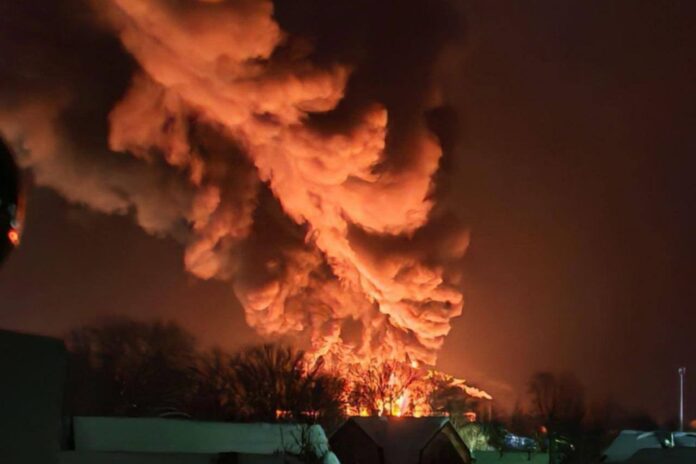
Russia’s Security Council Secretary Sergei Shoigu has stated that the Ural region—long considered beyond the reach of Ukrainian strikes—is now facing a direct threat, as Ukraine continues to expand the range and scale of its long-range capabilities.

According to Russian outlet Ura on March 17, Shoigu said during a visit to Yekaterinburg that the situation has changed significantly. “Yes, until recently the Urals were beyond the reach of air strikes from Ukrainian territory, but today they are already in the zone of direct threat,” he stated.

Shoigu also emphasized that no region of Russia can now be considered fully secure from Ukrainian drone attacks. Speaking at a field meeting in the Ural Federal District, he said that the evolution of unmanned systems and their use has reached a level where “no region of Russia can feel safe.”

According to the same reports, Shoigu highlighted the strategic importance of the Ural region, describing it as a concentration point for Russia’s defense-industrial complex, energy infrastructure, chemical industry, and major oil and gas assets.

He warned that disruptions to transport hubs and railway networks in the region could have broader economic consequences and impact supply chains critical to Russia’s military operations.

Russian officials stated that the number of aerial attacks on Russian territory rose nearly fourfold over the past year, reaching more than 23,000 incidents in 2025 compared to 6,200 in 2024.

According to Russian media reports, Ukrainian forces have increasingly targeted military, transport, and fuel-energy infrastructure deep inside Russia, with drone units, security service operations, and military intelligence playing a central role in these campaigns.

The Ural region includes several key industrial areas—Sverdlovsk, Chelyabinsk, Orenburg regions, Perm Krai, and Bashkortostan—which host a large share of Russia’s military production capacity. These areas have faced repeated strike attempts over the past year as Ukraine seeks to disrupt Russia’s defense industry.

The expanding reach of Ukrainian long-range systems has already been demonstrated in recent strikes deep inside Russian territory. According to monitoring channel Exile nova+ on March 16, drones targeted the Avia star aircraft manufacturing plant in Ulyanovsk—located approximately 1,800 kilometers from Ukraine.

The facility is a key producer of Il-76 military transport aircraft and other strategic aviation platforms. The incident temporarily disrupted operations and highlighted Ukraine’s growing ability to strike critical defense-industrial targets far beyond the front line.

Tor-M2U Air Defense, Missile Brigade, and Fuel Depot Are Hit by Ukrainian Forces in Several Areas

0

Ukrainian forces carried out a series of strikes on Russian military targets on March 16 and overnight into March 17, hitting air defense systems, missile units, logistics depots, and drone command posts, the General Staff of the Armed Forces of Ukraine reported.

According to the statement, Ukrainian units struck a Tor-M2U surface-to-air missile system near Klintsy in Russia’s Bryansk region. Another strike targeted an area of concentration of the Russian Black Sea Fleet’s 15th Separate Coastal Missile Brigade near Verkhniokurhanne in temporarily occupied Crimea.

A Russian communications hub was also hit near Mangush in the temporarily occupied part of Donetsk region, the military said.

Ukrainian forces also targeted several logistics facilities, including a fuel depot in Melitopol and ammunition storage sites near the settlements of Stepne and Terpinnia in the occupied part of Zaporizhzhia region. In addition, a drone training center near Henichesk Hirka in the occupied Kherson region was struck.

The General Staff said Ukrainian units also hit Russian drone control points near Huliaipole and Obrotne in Zaporizhzhia region, as well as a concentration of Russian troops near Chasiv Yar in Donetsk region.

The latest strikes follow similar operations carried out by Ukrainian forces a day earlier against Russian air defense systems and command positions. On March 15 and overnight into March 16, Ukraine’s Defense Forces conducted a series of strikes on Russian air defense assets and command posts in temporarily occupied territories.

The General Staff of the Armed Forces of Ukraine said the strikes targeted surface-to-air missile systems, radar stations, and command facilities located in the occupied parts of Luhansk, Donetsk, and Zaporizhzhia regions.

In a statement released on March 16, the General Staff said Ukrainian units struck “enemy air defense systems and command posts as part of efforts to reduce the offensive capabilities of the Russian aggressor.”

According to the military, a Tor-M1 short-range air defense system was hit near the settlement of Korobkyne in the occupied Luhansk region, while another Tor system was struck near Balashivka in the occupied part of Zaporizhzhia region.

Ukraine’s military intelligence also said its special forces struck two Russian vessels involved in military logistics in the Kerch Strait during a night operation on March 14.

According to the Main Intelligence Directorate, fighters from the Department of Active Operations targeted the railway ferry Slavyanin and the vessel Avangard, which were being used to support Russian supply routes.

Europe denies the US’s request to send troops to Hormuz

0

BRUSSELS — European countries have rejected calls from the United States to deploy naval forces in the Strait of Hormuz, stressing they have no intention of engaging militarily in the escalating conflict with Iran.

Following a meeting of EU foreign ministers in Brussels, EU foreign policy chief Kaja Kallas said member states “have no desire to actively engage in military actions against Iran,” adding that Europe has “no interest in an open-ended war.”

Kallas said the European Union remains focused on strengthening maritime security but confirmed there is little appetite to expand existing missions, such as Operation Aspides in the Red Sea, to include the Strait of Hormuz.

“Nobody wants to go actively in this war,” she said, emphasizing that the bloc’s priority is safeguarding freedom of navigation while intensifying diplomatic efforts.

Italy’s Foreign Minister Antonio Tajani echoed the position, saying EU naval missions focused on escorting merchant vessels and anti-piracy operations are not designed to operate in the Strait of Hormuz.

“We are willing to strengthen these missions,” he said. “But I don’t think they can be expanded to include the Strait of Hormuz.”

Germany also ruled out sending forces to the Gulf, with Chancellor Friedrich Merz saying Berlin “will not do so” and calling for a swift political solution.

German Defense Minister Boris Pistorius said any deployment outside NATO’s operational area would require legal approval and parliamentary consent, stressing: “It is not our war; we did not start it. We want a diplomatic solution and a swift end to the conflict.”

UK Prime Minister Keir Starmer also dismissed US pressure to join a military effort, saying Britain “will not be drawn into a wider war” and that any deployment must have a legal mandate.

Poland and Belgium similarly rejected calls to contribute naval assets, reaffirming their focus on diplomacy and regional stability.

Poland’s Foreign Minister Radoslaw Sikorski criticized US President Donald Trump’s stance on NATO while urging European participation, while Belgium’s Prime Minister Bart De Wever told parliament his country would not join any offensive alongside the US and Israel.

Earlier Monday, Trump said “numerous countries” were preparing to assist the US in reopening the Strait of Hormuz, but did not name them, citing security concerns.

The Strait of Hormuz remains a critical global energy corridor, with around 20 million barrels of oil passing through it daily before the conflict. Disruptions following Iran’s move to restrict passage have pushed oil prices higher.

At least 23 people are killed in suspected suicide strikes in northeastern Nigeria.

0

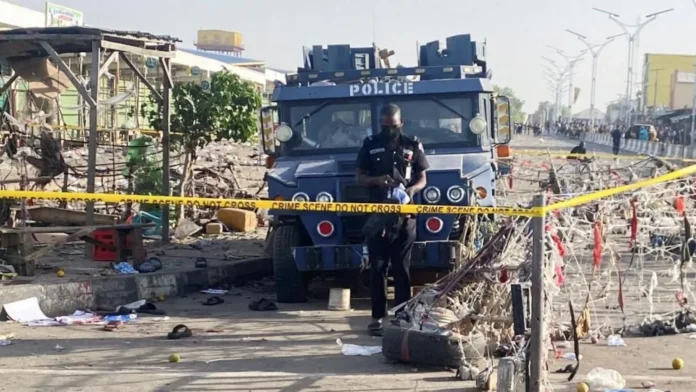
At least 23 people have been killed and 108 injured by a series of suspected suicide bombings in Maiduguri, marking one of the worst recent attacks on the capital of Borno state.

A post office, a popular weekly market and the University of Maiduguri Teaching Hospital were hit within minutes of each other at around 19:30 local time (18:30 GMT) on Monday, police in the north-eastern state say.

The sites, which are among the city’s busiest locations, had drawn large crowds after the day’s Ramadan fast was broken.

Nigeria’s military has blamed the attack on militants from the notorious Boko Haram group.

Boko Haram originated in Maiduguri and the city became the epicenter of the Islamist group’s insurgency, which began in 2009.

However, the state capital had been enjoying a relatively stable period after intensified military operations had pushed armed groups into remote border areas.

“Preliminary investigation reveals that the incidents were ​carried out by suspected suicide bombers,” Borno police said in a statement, adding that an investigation was under way to establish the identity of the attackers.

Modu Bukar, a resident who witnessed the market blast and helped take victims to hospital, told the AFP news agency: “We were sitting when we suddenly heard a loud explosion. Everyone immediately started running in fear.

“As we ran, people kept shouting that we should keep going.”

Mala Mohammed, 31, told AFP that people “ran toward the post office area because the market entrance and the post office are not far apart.

“Unfortunately, as they were running towards the post office, the person who had the explosive device ran into the crowd while people were still trying to escape.”

Nigerian President Bola Tinubu condemned the attacks in a statement on Tuesday, calling them “profoundly upsetting” and the “desperate acts of the evil-minded terrorist groups”.

He added that he has ordered security chiefs to move to Maiduguri and “take charge of the situation”.

Just hours before the bombings, security forces repelled an overnight attack by suspected Islamist fighters on a military post in the Ajilari Cross area, on the outskirts of Maiduguri.

The scale and location of Monday’s attacks – deep within the city – have shaken residents who had cautiously begun to believe that the worst years of Boko Haram’s insurgency were over.

Violence has slowed from its peak around 2015 but fighters from Boko Haram and another jihadist group, Islamic State West Africa Province (Iswap), have recently stepped-up attacks in north-eastern Nigeria.

Officials have warned that the threat of further violence remains, even as emergency and security agencies work to reinforce safety across the city.

Having worked in the field of nutrition for 26 years, these are my thoughts on supplements.

0

Supplements can absolutely have a role in supporting health. But before you purchase another pill or potion promising lustrous hair, increased immunity and a surging libido, there are a few things to stop and consider.

Sitting around the dinner table with friends last week, after the initial ‘how are you?’, the chat quickly moved to ‘how mad is the world right now?!’ and then retreated to safer ground: our current states of health.

This went from how tired we all were to the list of supplements everyone was taking morning and night for a raft of issues. Many of my friends freely admitted they didn’t know if these pills and powders did them good, but took them anyway, “just in case

In my 26 years of working in nutrition, supplement chat has always been in the mix, but these days it feels like whenever someone has a concern, the mind goes straight to: “Which supplement do I need to take for that?”

This is no surprise really, when we’re sold the idea that better sleep, more energy, stronger immunity, balanced hormones, banished brain fog, improved gut health and glowing skin will come quickly as a result of popping a pill or adding a scoop of something to your drink.

The reality is, this game is big business. The global supplement industry is now worth around US$200 billion (NZ$339 billion) a year, and in New Zealand some surveys suggest up to 80% of us have used them in the past year.

But if supplements always work the way the marketing suggests, wouldn’t we all feel amazing by now?

Supplements can absolutely have a role in supporting health. But before you start adding capsules and powders to your daily routine, there are a few things worth thinking about.

1. Supplements are the sprinkles

It’s all in the name. Supplements are designed to “supplement” a healthy lifestyle. Not replace it. Think of them as the sprinkles on the cake. They can enhance a good foundation, but they’re far from enough on their own.

If someone is sleeping poorly, chronically stressed, eating a lot of ultra-processed foods and seldom moving their body, a handful of supplements is unlikely to solve their problems. At best, they may work as a band-aid. At some point, the root cause of those issues and behaviors will need to be addressed and managed before you can feel good and function well.

It’s always best to focus your attention and finances on real food first, before reaching for supplements. While you can get vitamin C in a pill, for example, getting it from fruits and vegetables brings so many added benefits: fiber, antioxidants and the many other vitamins and minerals they contain. It is the interconnected matrix of real food that makes it magical.

2. There are cases of genuine need

While supplements are often marketed as lifestyle enhancers, there are situations where they are medically necessary or strongly recommended.

Pregnancy is one example. Women planning pregnancy or who are pregnant are advised to take folic acid leading up to pregnancy and for the first trimester. Iodine is also recommended throughout pregnancy and while breastfeeding to support the baby’s brain development and growth, and for some women vitamin D is recommended too.

Certain dietary choices can also make supplementation important. People following a vegan diet, for example, need to ensure they get vitamin B12, which can be very challenging to get without animal products. Vegans and vegetarians might also need to consider iron too. Having regular blood tests is helpful for knowing where your iron is at – talk to your GP – especially if you’re feeling tired or run down as your iron might well be the issue.

There are also medical conditions that affect how well nutrients are absorbed, including coeliac disease and inflammatory bowel disease and those who have had bariatric surgery will also need long-term supplement support.

People on GLP-1 weight loss medications like Wegovy may also need supplements to support their nutrient intake, as appetite is often significantly reduced and overall food intake can become quite low.

Older people with small appetites can sometimes benefit from additional nutritional support as well.

3. The supplements worth considering

Beyond clear medical need, there are also times when the evidence suggests supplements may be helpful for some people, and these are a few of the ones I would consider myself:

Omega 3 – Getting this from oily fish is best, but for some that can be a challenge, even if you do opt for salmon sushi over chicken and have sardines on toast sometimes. A supplement may be required to meet the suggested dietary target of around 430mg per day for women and 610mg per day for men. If you don’t eat fish, an algae-derived omega-3 supplement can be a good alternative.

Vitamin D – There are many people who may benefit from this. Those who have very little sun exposure because they’re inside a lot or cover up for cultural reasons. People with darker skin, older adults, and those who live in the South Island (particularly further South where I live) are also at greater risk of low levels of Vitamin D.

Magnesium – The evidence here is modest, but some people do find it helpful to support sleep and muscle cramps, so it’s maybe one to check out if you have those issues. There are many different forms which work for different things – some are better for sleep, others will soften your stools, so it’s worth talking to the pharmacist or a registered dietitian or nutritionist to get the right one for your goals.

Creatine – This has shot into the limelight lately. It is one of the most well-studied supplements and is considered safe when used appropriately. There’s strong evidence supporting its role in improving muscle strength and performance, and emerging research suggests it may also have benefits for brain and bones too.

A note on multivitamins – these can have a place in situations where dietary intake is poor, or nutritional deficiencies are likely. For example, studies from the University of Canterbury have explored how broad-spectrum micronutrient supplements may support mental health in certain groups. If you’re mostly eating a balanced, varied diet, multivitamins aren’t the insurance policy people often think they are. I’d suggest spending your money on quality food instead.

With all supplements, remember, the dose, the form and time you take them all need to be considered.

4. More is not always more

So many supplements these days are a combination of different vitamins, minerals, and other compounds. You might buy what appears to be a magnesium supplement for example, without realising it also contains B vitamins.

There are also many supplements with names designed to appeal to common concerns such as ‘Sleep Easy’ or ‘Stress Support’. These are often combinations of several micronutrients and sometimes herbs too.

While this might sound like a good thing, when you start combining products, something known as ‘supplement stacking’, these little bits can add up to too much and may lead to problems.

A woman who contacted me last week, for example, was taking a pregnancy multivitamin as well as another general pregnancy supplement she’d been recommended. I reviewed them and there was a massive double up of certain vitamins and minerals, which was not a good thing.

While some vitamins are excreted if we have more than we need, others are stored in the body and can become toxic if levels get too high. So, it is absolutely possible to overdo it.

Certain nutrients can compete with each other for absorption. High zinc intake, for instance, can interfere with copper levels, while iron and calcium can affect each other’s absorption.

Supplements can also interact with medications, including antidepressants, blood thinners, thyroid medication, and lithium. And while many products are safe, the quality of supplements can vary widely, particularly with products purchased online or imported from overseas.

It is well worth having a session with a registered dietitian or qualified nutrition professional who understands supplements or speaking to the pharmacist behind the counter (rather than the shop assistant) to check that the combination of what you plan to take isn’t problematic.

5. New kids on the block

There are always new supplements entering the market and gaining popularity on social media.

Current trends include menopause support blends, nootropics (often marketed as “brain boosting” supplements), and functional mushrooms such as lion’s mane, reishi and cordyceps. Many of these products claim to support focus, memory, stress resilience, or hormone balance.

While some ingredients show promising early research, the evidence for many of these supplements is still emerging and often based on small or preliminary studies rather than large, high-quality clinical trials. It is worth approaching these with curiosity but also caution. Look for independent evidence rather than relying solely on marketing claims and be aware that if a product sounds too good to be true, it probably is.

If you want to try a supplement where there is some reasonable evidence, and it is safe to do so, just really tune it to see if it is working for you and periodically stop taking it and see if you notice any real difference.

The UAE’s Limitations in Pursuing Food Security

0

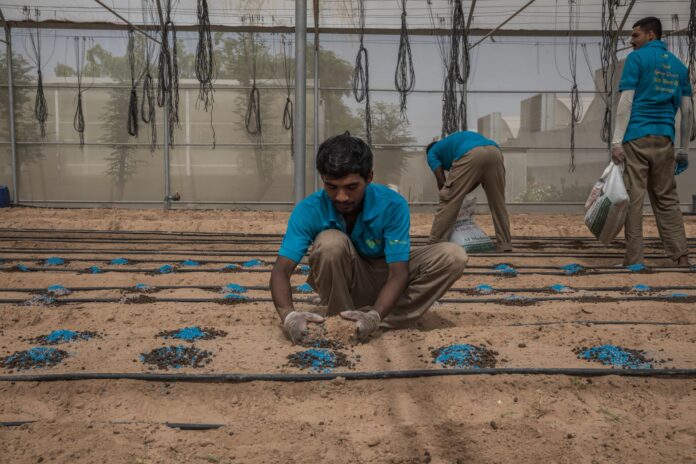
Deep in the heart of the Sahara Desert, an industrial complex of greenhouses rises above the dunes. Running underneath, the sand is a 35-mile-long pipeline transporting water to the property in this remote part of Mauritania.

The owners? A firm from the United Arab Emirates. The goal? Farming blueberries.

In recent years, companies from the UAE have invested heavily in farming projects across Africa. There are currently 56 projects spanning millions of acres from Sudan to the project in Mauritania, which I reported from last year as part of a year-long investigation into the UAE’s agriculture acquisitions in Africa.

Despite their country’s staggering wealth, UAE officials have long known that food is the country’s Achilles’ heel. High temperatures, lack of water and infertile soil make growing most crops exceedingly challenging, meaning the UAE has to import about 90% of its food. Increasingly, Emirati agribusiness has looked to Africa to reduce its anxiety about food shortages, quietly preparing for distant climate shocks and conflicts by investing $11.9 billion in East African agriculture alone since 2009, according to the Africa Center for Strategic Studies.

Now, as the war with Iran enters its third week, the entire strategy is being tested and cast into doubt. Iran has blocked the vast majority of ships from transiting through the Strait of Hormuz, the narrow strip of water between the UAE and Iran, through which 90% of the UAE’s food supply has historically flowed. The country holds six months of grain and staple stockpiles, but the blockage threatens fruit and vegetable supplies that depend on continuous imports, and experts warn that food shortages will occur if the war continues.

But the otherworldly scene at the farm in Mauritania revealed the extent of the UAE’s food challenges — even outside of war. The state-backed Emirati firm had said it was going to grow blueberries. But there were no blueberries in sight.

Why was one desert nation trying to grow fruit in another desert nation, over 6,000 miles away? Over the course of the past year, I’ve been investigating Emirati projects in Africa, seeking to understand why they are investing in remote sites where other companies would not dare, pushing through vast losses and, sometimes, allegations of land and water grabs.

Some farming investors say it is simply naivete, but others say the effort to transform arid land into arable is part of a long-standing Emirati tradition of projecting power and ingenuity, which in recent years has been a central part of its foreign policy effort to expand influence in Africa and beyond.

“The UAE is all about soft power,” said Naser Alsayed, a Middle East environmental expert at the think tank Chatham House. “When one state-owned entity invests, it doesn’t come alone.”

Before oil, Emiratis mainly depended on pearling — with divers plunging to depths of 6o feet to retrieve the shellfish and their valuable gems — and small-scale, oasis-fed agriculture. But as oil revenue filled government coffers from the 1960s, the first president of the newly formed UAE, Sheikh Zayed bin Sultan Al Nahyan, plowed vast funds into transforming the desert for modern, large-scale agriculture. “Give me agriculture, and I will give you civilization,” the founding father is often quoted as saying. Cynthia Gharios, a scholar at the University of Munster, says these projects were less about food security and more about projecting an image to the world of sovereignty and modernity — selling a country where oil wealth and ingenuity could transcend ecological limits.

But desert farming soon exhausted precious water supplies, and the state opted to abandon it. The idea of projecting Emirati sophistication through extreme farming was etched into the minds of elites, however, and the strategy shifted to purchasing land abroad, first experimenting in Sudan. This further crystallized during the 2008 price crisis, when food shortages rocked the UAE. In 2018, the UAE’s national food strategy announced it would become number one in the global food security index, an ambitious feat for a nation importing 90% of its food. As part of this, its footprint in Africa expanded into new areas — Egypt, Ethiopia, Mauritania, Morocco, Angola, Uganda, Zimbabwe.

But Emirati companies, eager to avoid accusations of neocolonial land grabbing and resource exploitation, promised to leverage their experience in hostile environment farming.

“We go to remote areas away from farmers, so they don’t say that we have taken their food or land,” Ahmed al-Falasi, a board member of Jenaan, an Emirati company with 250,000 acres across Egypt, Sudan and Ethiopia, told Reuters.

When it came to blueberries, the claims made by Elite Agro, a firm from Abu Dhabi with investments in Morocco, Egypt and Ethiopia, were big. On a government contract, the group said it would grow over 10,000 acres. If true, that would have made it the biggest single farm in Mauritania.

I wanted to see it. So, armed only with the name of a village in southern Mauritania, I set off through the arid landscape, occasionally interrupted by sparse, wispy acacia trees.

Many of these investments are shrouded in mystery. The estimate of 56 operations was put together by Land Matrix, a registry for large-scale land acquisitions, but it acknowledges that remote farms with a lack of company transparency make a true accounting of Emirati deals impossible. Access for journalists ranges from limited to nonexistent, adding a further challenge for anyone wanting to understand the reality behind the glitzy pictures of Emirati and African officials signing deals in boardrooms.

Under closer inspection, these estimates flatter the Emiratis. I’ve read countless documents and articles promising vast investments in Sierra Leone, Angola, Kenya and Tanzania, and nothing follows from them.

Even when deals progress into real-life production, it’s no guarantee that large-scale projects live up to the promises. In northern Senegal, I visited a company growing livestock fodder to export to the Gulf. Unpaid employees and rusting irrigation pipes above barren land were all that was left when the company went bust after one year. Herders and farmers still aren’t able to use the land.

“It’s the waste that hurts me,” said Doudou Ndiaye Mboup, a former electrician for African Agriculture. This is what people in the business of land prospecting call a zombie deal. It’s the worst possible outcome — no food for the Gulf, no food or employment for locals, while depriving them of land to grow food or raise livestock.

“Businesspeople walk away, but communities suffer,” said Rene Velvee, co-founder of the nonprofit Grain, which campaigns for land rights.

In Sudan, Land Matrix estimates that companies from across the Gulf have acquired 1.9 million acres, but many are failing to produce crops while blocking locals from using the land, according to analyses. One satellite review of large-scale land acquisitions estimates that only 4.2% of large-scale investments are producing food. Another study says 24% fail outright.

When I arrived in the village in Mauritania, no one — farmers, police, the mayor’s office — knew anything about this farm. The deputy mayor, dressed in flowing white robes, took pity on me and made some calls. Thirty minutes later, I was on my way to the alleged location, two hours north.

We turned off Mauritania’s only highway, where the deputy mayor said it was only a few more miles till our destination. After one hour down this gravel road, increasingly despondent about my chances, a tractor emerged out of a cloud of dust.

A rugged man stepped out of the cab, his head wrapped in a headscarf, curious about an unexpected visitor. As I asked him about the company, he looked at me vacantly. Only when I mentioned the Emiratis did a toothy grin appear, and he ordered me to follow his pickup. He zigzagged over sand dunes, navigated through herders and their cattle, and out of nowhere an industrial complex of greenhouses emerged from the desert.

The farm existed, but no blueberries were growing. The fine dust from the Sahara spoiled the delicate fruit, and the company had to grow hardier watermelons instead. Of the 10,000 acres leased, the greenhouses occupy barely 1%, the majority standing empty.

Experts and food investors greet the idea of growing blueberries and watermelons in the Mauritanian desert with astonishment, even ridicule. It doesn’t even contribute to the UAE’s food security, because the watermelons are exported to the U.K. and Europe.

An employee from Al Dahra, a sovereign wealth fund-backed agribusiness with 22,000 acres in the military-controlled Egyptian desert, says crops are sold on the global market, not transported back to the UAE.

It poses a question: What motivations lie behind such risky investments by companies claiming to pursue Emirati food security? The real harvest is influence, not food, said Martin Keurlitz, assistant professor at the American University of Beirut.

“Agriculture is a wonderful diplomacy tool,” Keurlitz explained. Farming projects, ostensibly promising benefits to the poor, are part of a wider strategy to forge stronger relations with elites of stronger nations. Projects don’t even need to materialize to be useful. Even an announcement of a deal is a foot in the door to more lucrative and influential industries — mining, logistics, energy.

Husam Mahjoub, the founder of Sudan Bukra, told me that just because farming projects in Sudan sit empty, it doesn’t mean the ventures were a failure. By investing in farmland, Emirati officials and business executives could see the inner workings of Sudanese politics. Gold exports from Sudan, worth more than $1 billion in 2023, now dwarf the food trade.

But this influence has a dark side, especially in Sudan. It’s widely understood that the Emiratis funded the insurgent Rapid Support Forces in Sudan, who have driven instability for decades, displacing 9.5 million people and committing atrocities in El Fasher late last year.

Presumed to be a bastion of safety in the Middle East, the Iran war will fundamentally reshape the UAE’s priorities at home and abroad. Gulf officials are already considering invoking force majeure on overseas investment contracts to ease financial pressures caused by the war.

The impact of increased food security concerns on risky agribusiness investments in Africa remains to be seen. Alsayed from Chatham House said the UAE should focus on expanding its already extensive logistics and port networks across the continent.

“The smartest strategy of their plan is the focus on ports,” Zayed said. Control of ports is control of food supplies, he added.

Meanwhile, Al Dahra, the sovereign wealth fund-owned agribusiness, shows no sign of slowing down. In January, the firm announced that it sought to become the world’s largest farming company, aiming to reach a footprint of 1.2 million acres worldwide. In February, it announced a deal of 45,000 acres in Tanzania.

As the Strait of Hormuz remains closed for the foreseeable future and food shipments are blocked, the UAE’s African breadbasket strategy is of little use — and would be even if it were more successful and less experimental. Despite the greenhouses in Mauritania and land in Egypt, the UAE is still a prisoner of geography, relying on fragile supply chains. One day, UAE food security and the metamorphosis of the African desert into lush green fields may be a reality. For now, it’s a mirage.